Bench notes
Your camera sees pixels. Your paper needs paths.
How behavioural video tracking works, how to set up the camera and lights, and how to prove your data are clean.
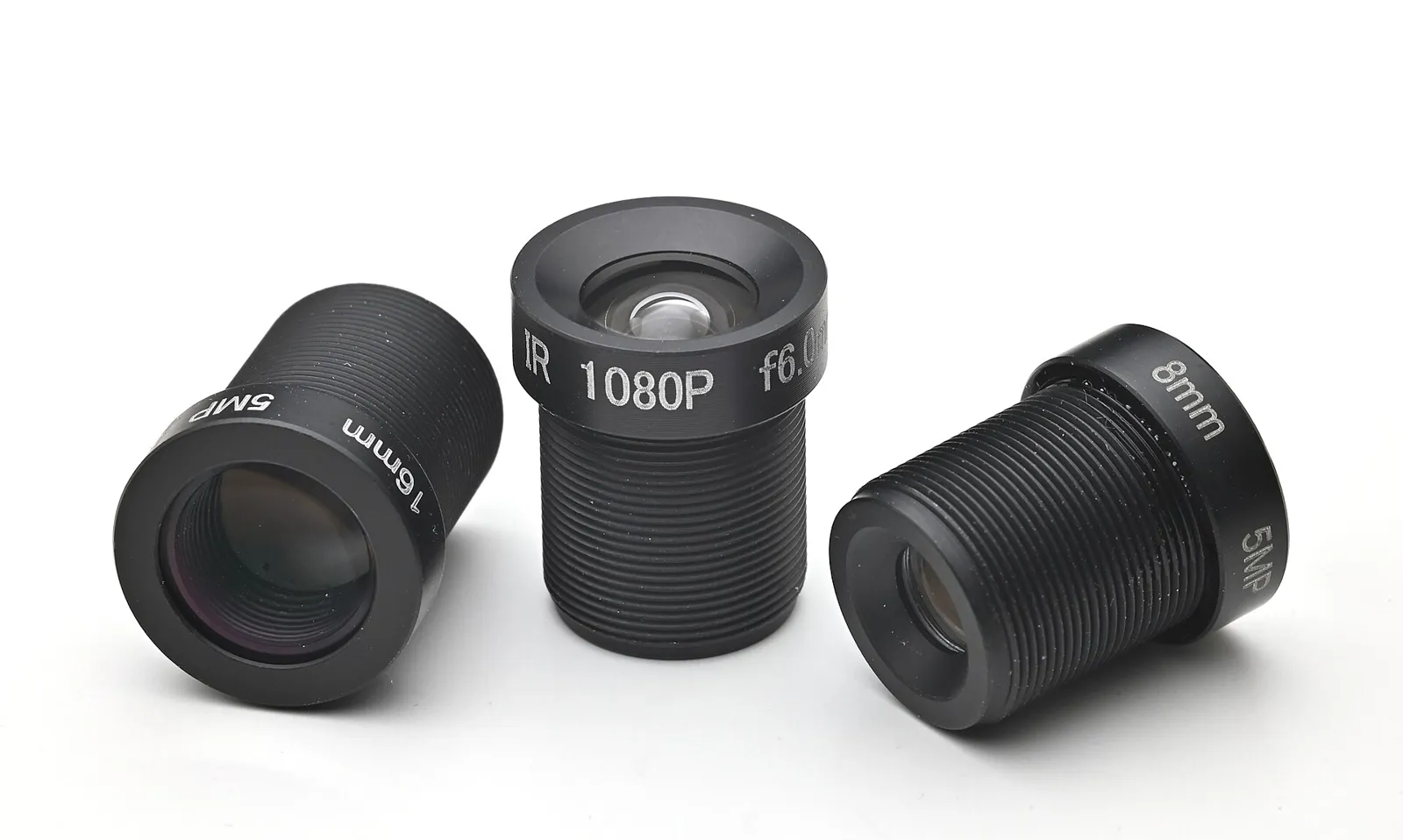
Image: credit
Video tracking looks like magic until it goes wrong. A reflection becomes a second mouse, a shadow eats a corner of the arena, and suddenly your animal has teleported across the pool at forty metres a second.
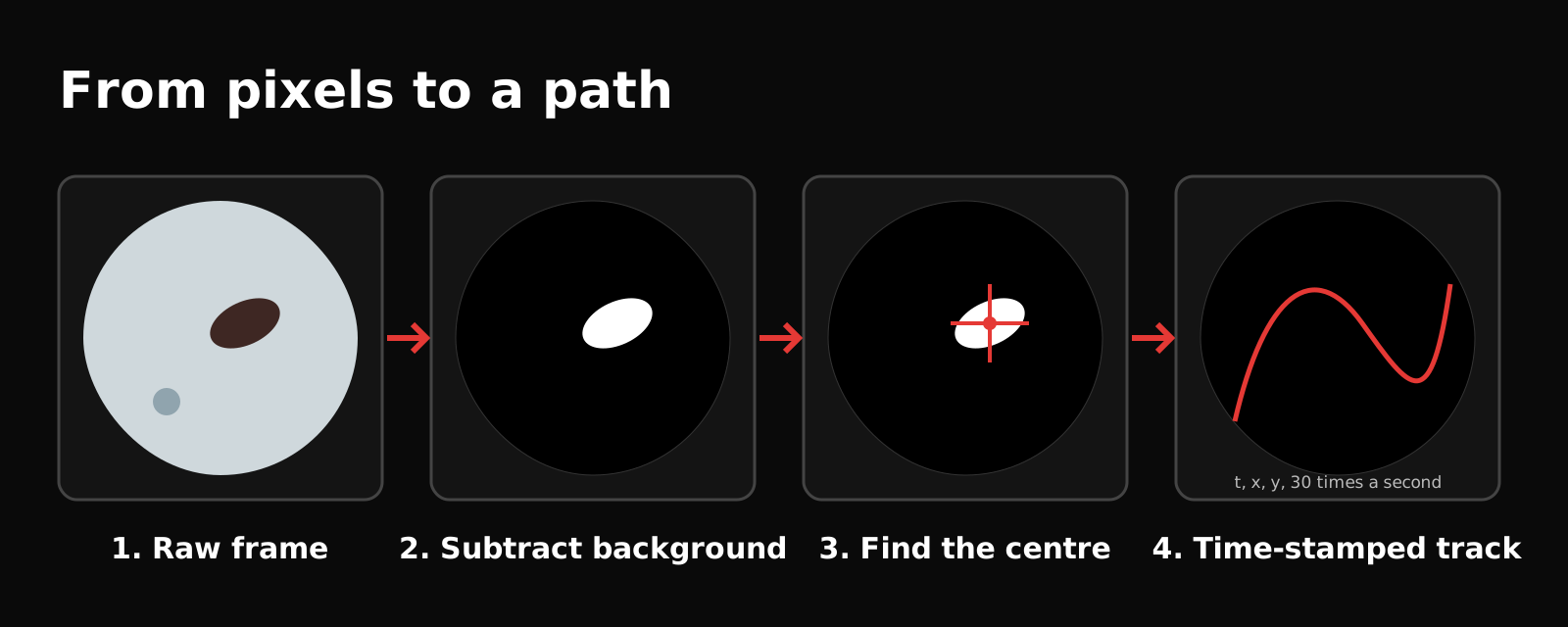
These notes take the opposite approach to magic. They explain what the software is doing in each frame, how a sensible camera and lighting set-up prevents most problems, which tests you can track, and how to check and report data quality before a reviewer does it for you.
Explore
On this site
How video tracking actually works
How behavioural video tracking finds an animal in each frame and turns raw video into time-stamped coordinates.
Camera and lighting, done right
Practical camera, lens and lighting advice for reliable animal video tracking.
Tests you can track
Common behavioural tests that video tracking supports, and the main measures for each.
Proving your tracking data are clean
How to check and report the quality of video tracking data in behavioural experiments.
Watch
HVS Image Morris water maze pool and platform calibration
Calibrating the pool and platform, the five minutes that make every later distance trustworthy.
Video from the HVS Image channel on YouTube. It's loaded in privacy-enhanced mode and only plays when you press play.
From the journals
Spotted on the wire
Recent work where cameras and trackers did the heavy lifting, from robot fish to chewing rats.
A muscle-powered robot the size of a stick of gum
A different kind of water maze: MIT engineers built a flat gel strip with fins of light-sensitive muscle cells. Flash one fin and it contracts, so the robot can be steered through a small obstacle course. Top speed is about four body lengths a minute, roughly the cruising pace of a sixgill shark. For tracking fans, it's a fresh case of following a swimmer frame by frame.
Read the original at NotebookcheckSoft food, older mice and the hippocampus's support cells
Female Swiss albino mice aged 6 or 18 months lived on hard pellets, soft food, or a switch between them, and astrocytes in one hippocampal layer were counted and measured. The team reanalysed earlier water maze data as a single contrast index, and older mice scored lower on day four. A study about texture, chewing and glia that uses maze data as its behavioural anchor. Published in Behavioral and Brain Functions.
Behavioral and Brain Functions
Read the original at Bioengineer.orgAnabolic steroid, foggier spatial memory, and a careful design
Twenty-seven male Wistar rats received nandrolone at 5 or 15 mg/kg, or vehicle, every third day for 22 days. Animals were coded, the tester was blind and a separate person ran the statistics. In the water maze (four trials a day for four days, platform 1 cm under the surface) the probe trial showed a memory deficit while movement stayed normal, and hippocampal calcineurin rose. Published in Behavioral and Brain Functions.
Behavioral and Brain Functions
Read the original at Bioengineer.org